
Data Collection and Consumer Research in Modern Canadian Industries
How Canadian businesses across sectors use consumer data to drive decisions, and what agriculture can learn from the most data-driven industries.
By the numbers
979
farmers surveyed nationally (2025)
21,000
consumers in PwC’s 2025 study
5,000+
Canadian e-commerce brands analyzed
83.7%
of Ontario online gamblers on regulated sites
Figures drawn from 2025 industry research; see the sections below for sources.
Why industries invest in consumer research

Consumer research now underpins business strategy across almost every sector of Canada’s economy. Knowing what customers want, how they behave, and what sways their decisions lets organizations cut risk, improve products, and spend where it pays off.
Agriculture
Canadian agriculture, long focused on production, is turning to data to read markets, consumer preferences, and policy. In 2025 the Simpson Centre surveyed 979 farmers across all ten provinces. Top concerns: disaster relief for extreme weather (54.95%), federal support for climate risks (48.42%), and soil health (47.5%).
Research reaches past farmers too. A March 2025 survey of 5,045 consumers across Canada, Italy, the US, and the UK gauged willingness to pay for climate-smart pasta, testing whether sustainability credentials translate into demand and premium prices.
Food production
The food industry is among the heaviest users of consumer research. PwC Canada’s Voice of the Consumer Report 2025 drew on 21,000+ consumers across 28 countries, including 1,020 Canadians. Generation Z is driving demand for healthier options, and the gap with the wider population is striking.
| Generation Z trend | Gen Z | All Canadians |
|---|---|---|
| Follow a vegetarian or vegan diet | 20% | 12% |
| Eat more alternative meats | 22% | 13% |
| Cutting back on alcohol | 48% | – |
Source: PwC Canada, Voice of the Consumer Report 2025.
As Gen Z starts heading families, it becomes a key segment. The research also shows a tension: 75% of Canadians say they would pay more for local food, yet 62% would still pick a cheaper import, shaping pricing and positioning. Broader trackers add context: the Canadian Food Sentiment Index follows views on affordability, trust, safety, and buying intentions, while NSF research found Canadians lack confidence in food labels and nutritional information.
Retail
Retailers use big-data analytics across inventory, pricing, marketing, and supply chain. KPMG’s 2025 survey found 56% of shoppers name price as the main driver, yet 90% belong to loyalty schemes and 92% say those schemes sway their choices, creating a loop of personalized offers and repeat business. Walmart Canada is investing C$6.5 billion in distribution. Smaller chains adopt AI forecasting and demand cleaner vendor data.
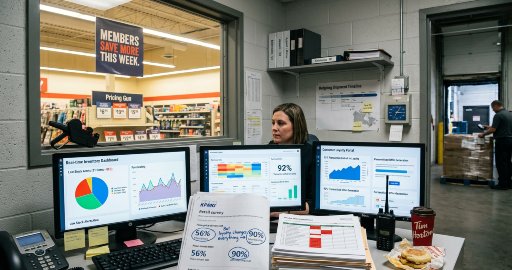
The companies pulling ahead treat data as a steering wheel, not a rear-view mirror.
A retail analyst, quoted in KPMG’s 2025 survey coverage
Transportation
Transportation leans on research into how Canadians move. A 2025 Logit Group survey found most are concerned with driving issues, from fuel cost to safety and congestion. Government of Canada research in early 2025 measured awareness of the zero-emission vehicle mandate and purchase plans, a survey of 1,000 drivers added upkeep behavior, and TICO research found about half of Ontarians were likelier to travel within Canada in 2025, with more than two in five skipping the US.
How research methods have changed
How data gets collected has shifted: from phone surveys and focus groups to digital analytics, behavioral tracking, and real-time streams.
Surveys
Surveys remain foundational but now run online and at scale. The Simpson Centre’s 979-farmer survey used Stratus Ag Research’s database, with provincial quotas from Statistics Canada. The scale is large: PwC reached 21,000 consumers across 28 countries, Restaurants Canada’s 2025 Foodservice Facts tracked dining habits, and the Canadian Food Sentiment Index follows attitudes over time.
Digital analytics
In e-commerce, clickstream analysis tracks what shoppers browse, buy, and abandon. Omnisend’s report on 5,000+ Canadian brands found automated, behavior-based emails generated 27% of email revenue from just 2.1% of sends, beating generic messaging by a wide margin.
Customer behavior tracking
In streaming, Roku’s VOD study found Canadians’ time with ad-supported content rose from 7.3 hours a week in 2024 to 10.2 in 2025, while streamers reachable by in-stream ads climbed to 85%, from 69%. Retailers use hyperlocal intelligence too: Environics Analytics and NielsenIQ deliver weekly data across 360 Canadian markets, and NIQ has opened 600+ Canada-specific GeoPurchase segments across seven retail categories.
Industries built on behavioral data
Every industry benefits from consumer data, but some sectors are built on it from the ground up.
E-commerce
E-commerce is the clearest case. The Canadian market is expected to reach US$89.27 billion by 2025, growing at 9.6% a year, and in 2025 order volume across all channels rose 20% year over year.
Growth, though, concentrated among the strongest performers. The top 10% of brands took half of all order growth. What set the winners apart was speed in reacting to customer behavior. Shoppers engaged with marketing less often in 2025, but each interaction was likelier to end in a purchase, and a larger one. Average order value from email climbed from $172 to $196.
$89.27B
Canadian e-commerce market by 2025
20%
year-over-year order growth in 2025
$172 to $196
email order value, up 14%
Source: Canadian e-commerce market estimates and Omnisend, 2025.
Online casinos
Online casinos rank among the most data-driven consumer businesses in Canada, leaning on player-behavior analysis, retention metrics, and digital experience research.
Ontario’s iGaming market, launched in 2022, has reached a high rate of regulated play: 83.7% of the province’s online gamblers now use regulated sites. That framework requires frequent fairness testing and compliance review, with third-party verification confirming that games perform within statistically fair parameters.
Behind the scenes, operators use real-time analytics to flag concerning behavior early, a meaningful public-interest part of the modern sector. Games are designed for clarity, and analytics help studios understand what keeps an activity enjoyable without overwhelming players. Developers study behavior within privacy rules to improve engagement and to find features that support sustainable enjoyment.
This mirrors a wider cultural shift in Canada, where people expect transparency, fair play, and quality whether they shop, stream, or play. Responsible-gaming tools have moved from suggestion to requirement: personalized spending limits, optional time reminders, and self-exclusion programs such as Ontario’s My PlayBreak point to a real reorientation toward player protection.
Mobile gaming
Mobile gaming platforms gather the same kind of detail, including session length, in-app purchases, level completion, and social interactions, and use it to tune engagement and monetization.
Streaming services
Streaming platforms collect enormous amounts of behavioral data: what people watch, when, for how long, what they search for, and what they drop. That feeds recommendations, programming, and ad strategy.
More than four in five anglophone households and seven in ten francophone households now subscribe to at least one streaming service, and nine in ten Canadian TV streamers use an ad-supported tier. That combination opens wide room for targeting built on viewing behavior.
What agriculture can learn from other sectors
Agriculture has a lot to gain from watching how other data-driven industries operate.
User engagement
E-commerce and streaming are experts at understanding what keeps users coming back. For agriculture, that translates into knowing what keeps farmers engaged with digital tools, which information they value, and how to deliver it well.
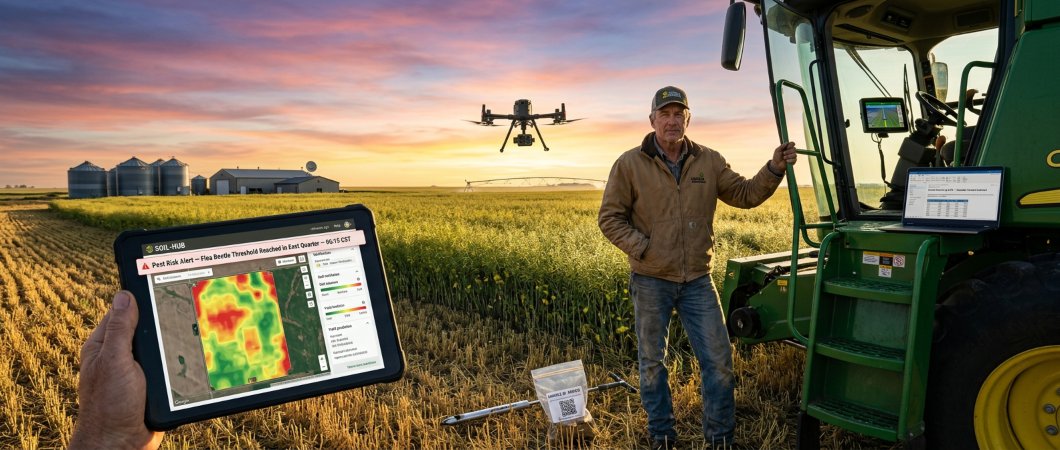
Initiatives like SOIL-HUB, a data coordination center supporting decisions for Canada’s crop farmers, are gathering large volumes of disconnected soil and farm data that currently sit in isolated spreadsheets and hard drives. The aim is to turn raw on-farm information into timely, usable insight that lifts profitability and sustainability.
Digital communication
The online casino sector’s use of behavior-triggered communication offers a template for extension services and ag-tech platforms. Just as automated emails set off by browsing or cart abandonment generate 27% of email revenue from 2.1% of sends, agricultural services could use behavioral triggers to deliver advice at the right moment: pest alerts when conditions warrant, planting guidance from soil data, and market intelligence when prices move.
Data-driven decision making
Canadian farmers are adopting digital tools to sharpen precision, cut waste, and lift yield. Remote sensing, precision equipment, and analytics are helping farms raise productivity while conserving resources.
As of March 2025, roughly $15 million of an initial $30 million investment in AI and data infrastructure for the agri-food sector had been committed to projects, rising to $33.1 million once industry contributions were counted. Machine learning can build efficiencies and continuous improvement across business processes. The lesson from other sectors is consistent: data is not just about reading the past. It is about anticipating what comes next and making better decisions today.